Ever since my early experiments in painting, I have gravitated to painting on panels. Canvas is OK, but I just love the tactile quality of chalk gesso on panel. So I’ve always fully gessoed my panels on both sides – which is in fact how the flemish primitive painters did it too. And indeed it’s always seemed a shame to me to ignore that reverse side. (Sometimes in museums, you’ll see the back side of a painting done with a trompe l’oeil effect to depict a textured surface like, wood or marble.)
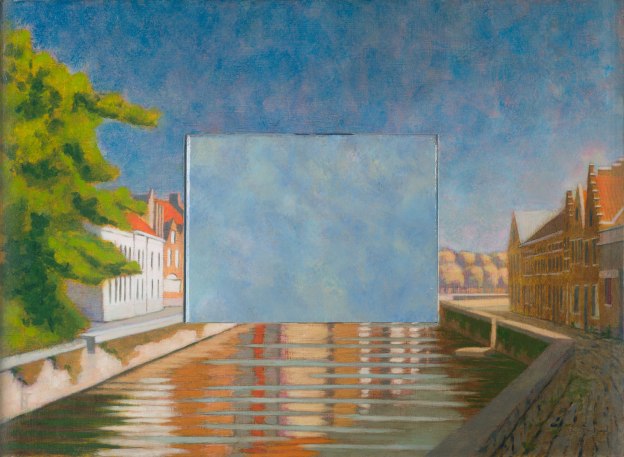
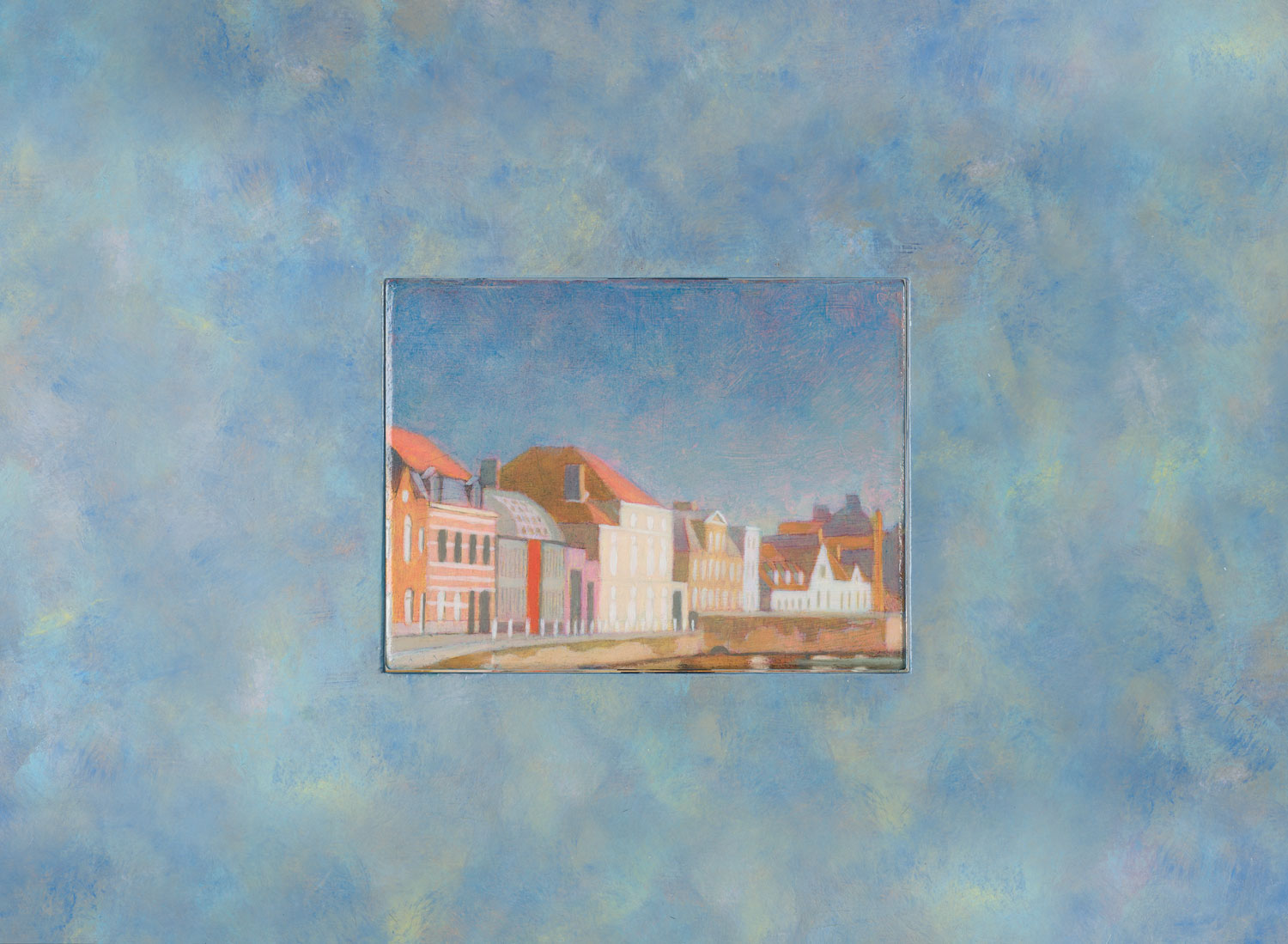
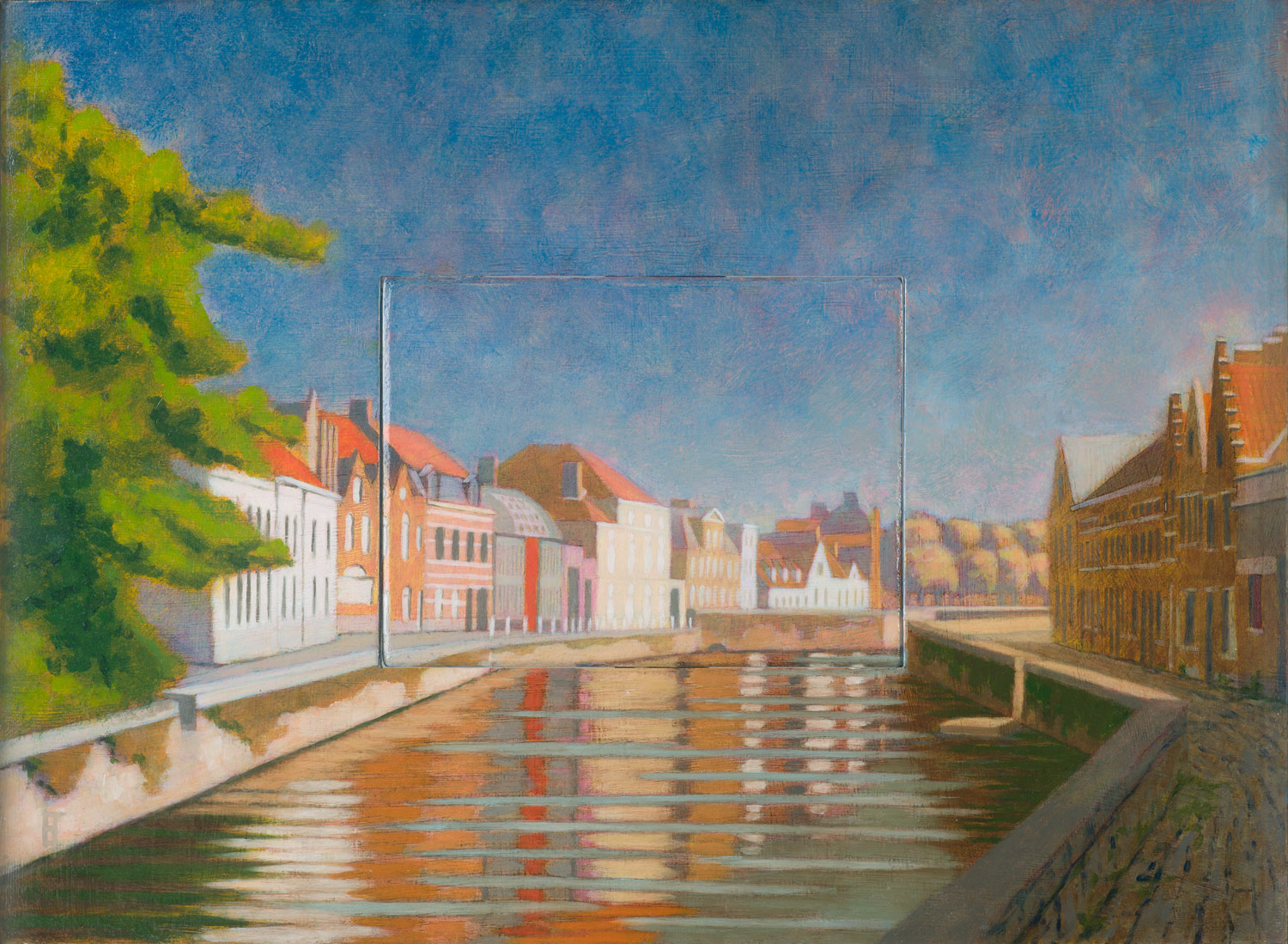
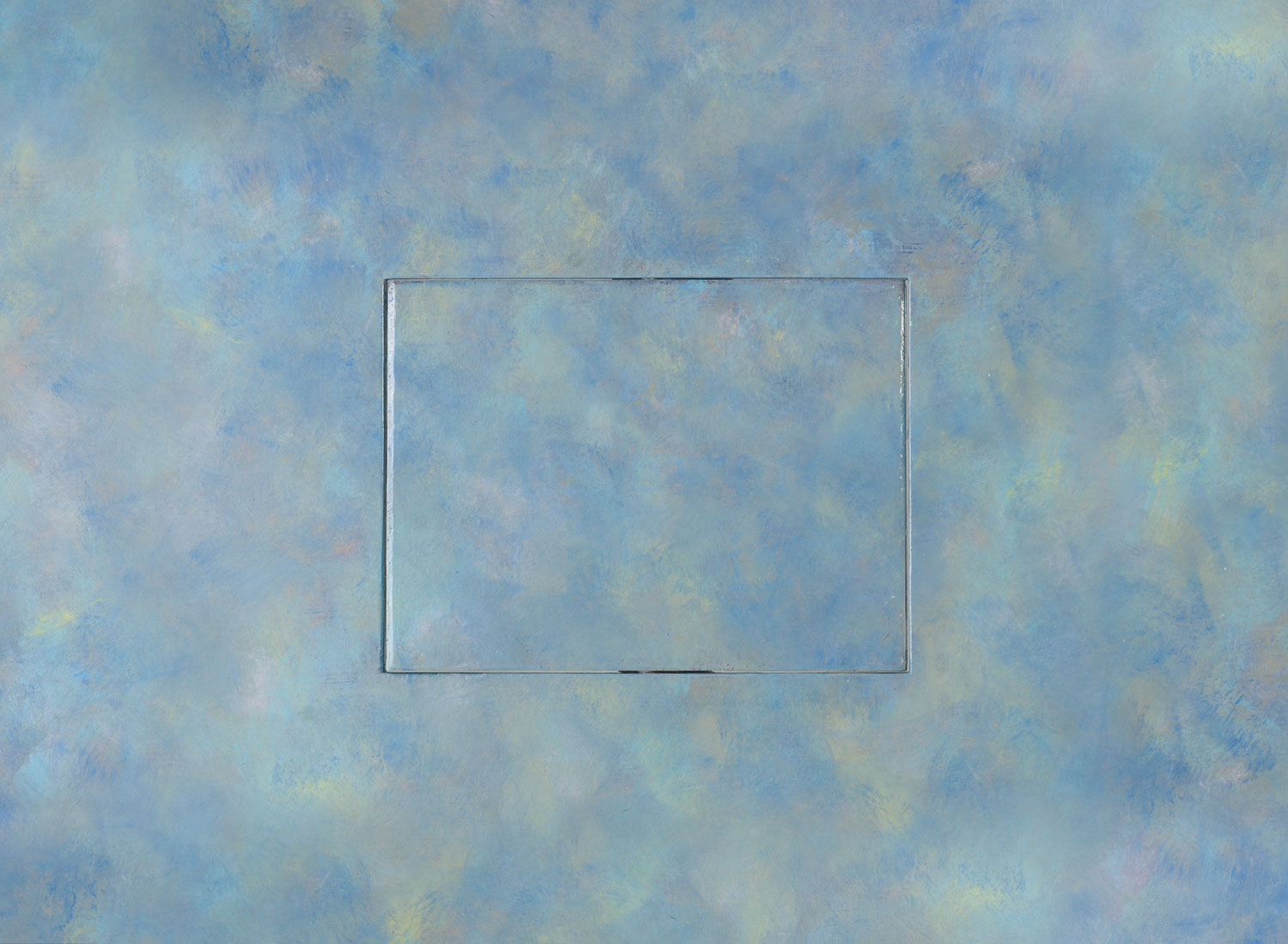
When I discovered (in 2009) how well a turtle shell trompe l’oeil effect had worked on a wide frame for a detailed cityscape I had painted, I decided to bring the abstract effect directly into the painting. So I commissioned a local carpenter to build me a wooden panel with a rotating inner core. I gessoed both sides and set to work. This is the result. It’s not really a painting to hang from a wall, since the back sides also participates. But who ever said art should be functional?
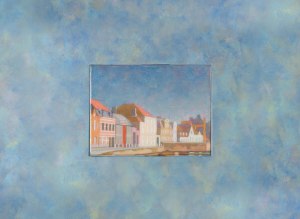
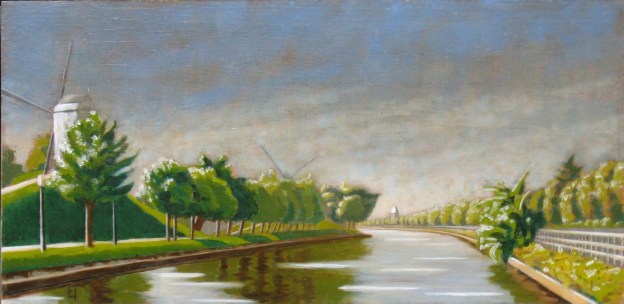
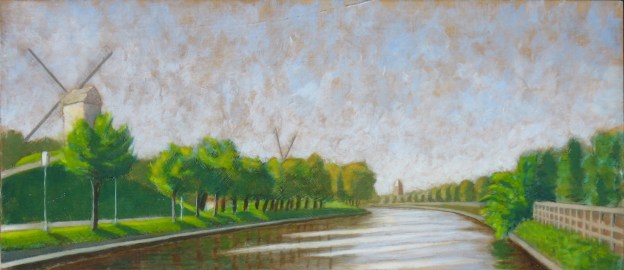
back side of the Inside-out view of the Predijkherrenrei painting.
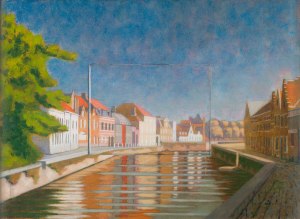
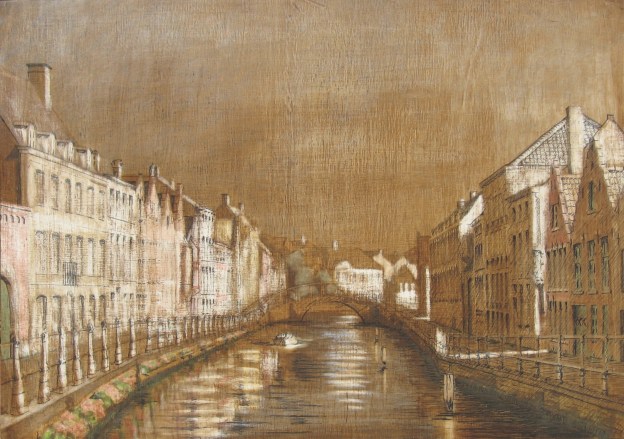
The front side of the Predijkherrenrei cityscape in Bruges Belgium
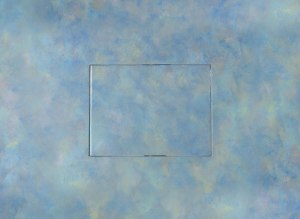
The back side of the Predijkherrenrei landscape painting.
Two sided oil on panel with rotating inner core. Based on a value study. July 2010. 44 x 59 cm or 17 1/4 x 23 1/4 inches. NFS. You can read about the work-up of this piece here.




 ellentrezevant